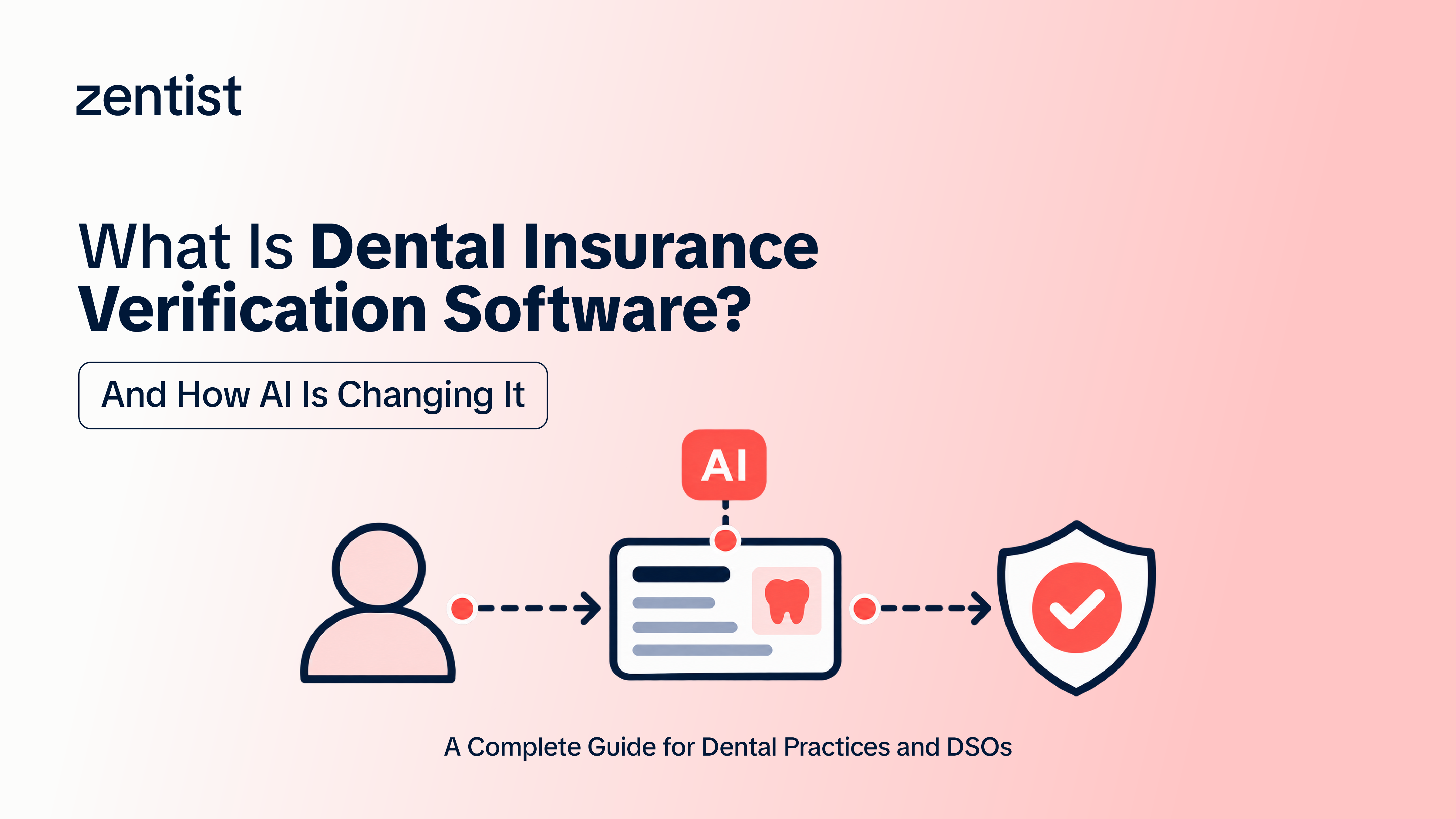
Dental insurance verification software helps dental practices confirm a patient's coverage, benefits, limitations, and financial responsibility before delivering care. AI is changing that work by turning slow, manual eligibility checks into faster, more consistent workflows that support dental billing, patient communication, and claims management. Platforms like Zentist's Remit AI now run these checks automatically for scheduled patients in advance of their visit, surfacing deductibles, frequency limits, and coverage gaps before the front desk ever has to call a payer. The real value is straightforward: fewer insurance surprises, less front-desk friction, and better information before treatment begins.
What Is Dental Insurance Verification Software?
Dental insurance verification software checks whether a patient's insurance is active and summarizes the benefits that may apply to a visit, procedure, or treatment plan. Instead of having staff call carriers, log into payer portals, or manually copy plan details into notes, the software gathers eligibility and benefit information in a more standardized way. Modern verification tools can surface plan status, deductibles, coinsurance, limitations, and other benefit details that help teams prepare accurate estimates and cleaner dental claims, according to DentalXChange's eligibility product documentation.
In practical terms, the software sits between the practice, the payer, and often the practice management system. It supports patient verification before appointments, helps billing teams understand coverage before claims are submitted, and gives treatment coordinators better information when discussing costs. That does not make the estimate a guarantee of payment, but it gives the team a stronger starting point than a rushed phone call or an outdated insurance card.
How Is AI Dental Insurance Verification Different From Manual Checks?
AI dental insurance verification automates the data gathering, reading, normalization, and exception-flagging that used to depend entirely on staff judgment. It replaces single yes/no eligibility checks with detailed, code-level benefit breakdowns. Instead of only returning a basic yes-or-no eligibility response, AI-powered verification software interprets benefit details, organizes payer data, identifies missing fields, and presents information in a format the practice can act on immediately. Some platforms also support scheduled patient checks in advance and code-level benefit breakdowns, which help teams prepare before the patient arrives.
The key shift is not that AI replaces the insurance coordinator. It changes the coordinator's role from chasing routine confirmations to reviewing exceptions, resolving unclear responses, and communicating financial expectations with patients. Dental insurance data can be messy, payer responses vary, and not every plan detail is easy to automate. The best platforms give staff faster answers while still making room for human review when something looks incomplete.
Why Practices Are Rethinking Manual Verification
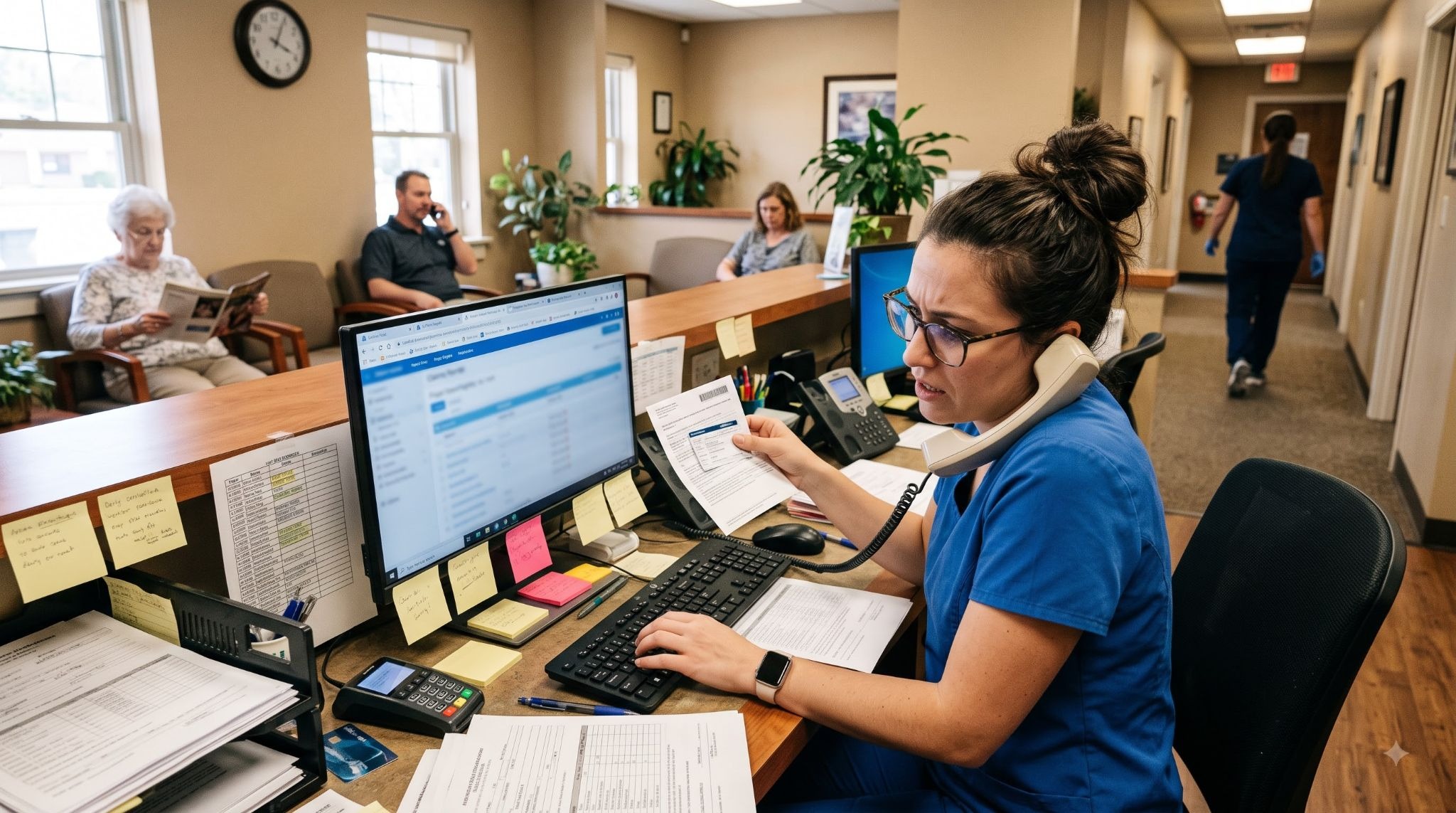
Manual verification is familiar, but it is also hard to scale. A busy schedule can mean dozens of eligibility checks across multiple payer websites, long hold times, and repeated data entry. When the team is rushed, small mistakes create bigger downstream problems: delayed treatment acceptance, inaccurate patient estimates, claim rework, or avoidable denials.
AI-driven verification tools improve the rhythm of the day. A practice can verify upcoming patients earlier, spot coverage issues before the appointment, and give the front desk more time to focus on the patient experience. The benefit is not only speed; it is consistency. Useful gains typically include less repetitive admin work, earlier financial conversations with patients, cleaner dental billing workflows, stronger claims management when prior authorization needs are flagged sooner, and better schedule readiness when eligibility is confirmed before the patient arrives.
For DSOs managing verification across dozens of locations, the inconsistency problem compounds quickly. When each office handles verification differently different timing, different tools, different documentation standards central billing teams lose visibility and control. This is exactly the gap that Zentist's revenue cycle management platform is designed to close, with eligibility verification built into the same automated workflow as payment posting, denial management, and AR prioritization.
What Good Verification Tools Should Capture

A strong insurance verification workflow collects more than "active" or "inactive." Dental teams need enough detail to understand what the plan covers, what the patient owes, and what could delay reimbursement. The most useful systems organize the details that affect clinical, financial, and administrative decisions.
A practical checklist of what verification should return:
- Patient name, date of birth, subscriber relationship, and plan status
- Effective dates and termination indicators
- Deductible amounts and whether they have been met
- Annual maximums and remaining benefits
- Preventive, basic, and major service coverage levels
- Frequency limits for exams, cleanings, X-rays, fluoride, and other services
- Waiting periods, exclusions, downgrades, and missing tooth clauses
- Procedure-code-level coverage for planned treatment
- Prior authorization or pre-determination indicators
- Coordination of benefits details for dual coverage
- Payer reference numbers or timestamps for audit trail support
This level of detail matters because dental billing depends on specificity. A patient may be eligible yet still have a frequency limitation, unmet deductible, waiting period, or code-level restriction that affects the estimate. AI can bring those details forward earlier but the practice still needs a workflow for reviewing and documenting them.
Integration Turns Verification Software Into an Everyday Workflow
Verification software becomes far more useful when it connects with the practice's existing dental software instead of creating another isolated screen. Integration with a practice management system reduces duplicate entry, keeps patient and appointment data aligned, and makes eligibility information easier for the front desk, billing team, and treatment coordinator to find, according to DentalXChange's eligibility integration documentation.
For many practices, integration is the difference between "we bought a tool" and "we changed the workflow." If the verification result lives outside the chart, staff still copy and paste details manually. If it connects to the appointment or patient record, the team acts faster with fewer handoffs.
Before choosing a platform, ask: Does it connect with the PMS already in use? Can it verify scheduled patients automatically before the appointment? Does it return detailed benefit breakdowns or only basic eligibility? Can staff see exceptions, missing data, and unclear payer responses clearly? What happens when the payer does not return complete information? How are verification results documented for billing and follow-up?
For DSOs evaluating multiple platforms, these questions map directly to the eight-question framework in the Zentist guide to evaluating dental billing software.
Security, Accuracy, and Human Oversight Still Matter
AI can make verification faster, but it does not remove the need for accountability. Payer data can be incomplete, portals can change, and plan rules can be interpreted differently depending on the procedure and timing. A reliable workflow defines when staff accepts an automated result, when they review it manually, and how they document uncertainty for the patient record.
Security is equally important. Dental practices handle protected health information, and as HHS guidance on the HIPAA Security Rule confirms, covered entities must maintain appropriate administrative, technical, and physical safeguards, and cloud-based technology may be used with electronic PHI when appropriate safeguards and BAAs are in place. Before signing with any verification vendor, ask about access controls, audit trails, encryption practices, data retention, and business associate agreements.
A Practical Rollout Plan for Better Adoption

New technology works best when it is paired with a clear process. Even strong verification tools frustrate teams if no one knows who reviews results, where notes belong, or how exceptions are handled.
- Map the current workflow — who verifies insurance, when, which payers take longest, where errors appear
- Define the ideal future workflow — should verification run at scheduling, days before, or at check-in?
- Test with a small sample of real upcoming appointments before rolling out fully
- Create exception rules for missing benefits, unclear secondary coverage, or prior authorization needs
- Train by role — front desk, billing, and treatment coordinators need different views
- Track results — call volume, estimate quality, claim rework, unresolved issues — then refine before expanding
The practices that see the most value treat AI as workflow infrastructure, not a magic button. They keep staff involved, measure what improves, and maintain manual fallback steps for unusual cases.
The Takeaway for Dental Practices and DSOs
Dental insurance verification software is becoming a core part of the revenue cycle, not just a front-desk convenience. When integrated well, it supports patient verification, cleaner dental claims, better treatment conversations, and more organized claims management. AI adds speed and structure, but the strongest results come from combining automation with trained staff and thoughtful processes.
For practices and DSOs evaluating platforms, the right question is not which tool is newest. It is which platform helps your team verify coverage earlier, explain benefits more clearly, protect patient data, and keep dental billing moving with fewer avoidable surprises at the scale your organization actually needs.
To see how Zentist handles eligibility verification as part of a full dental RCM workflow, visit Remit AI by Zentist.
FAQ
Heading

Answer

